Start with the question, not the whole city
Before choosing an address, read the briefing and identify the immediate problem. Who needs your help? What do you know for certain? What do you need to find out next? A useful first goal is smaller than ‘solve the entire mystery.’ It might be finding the person who supplied a photograph or locating an address mentioned in a letter.
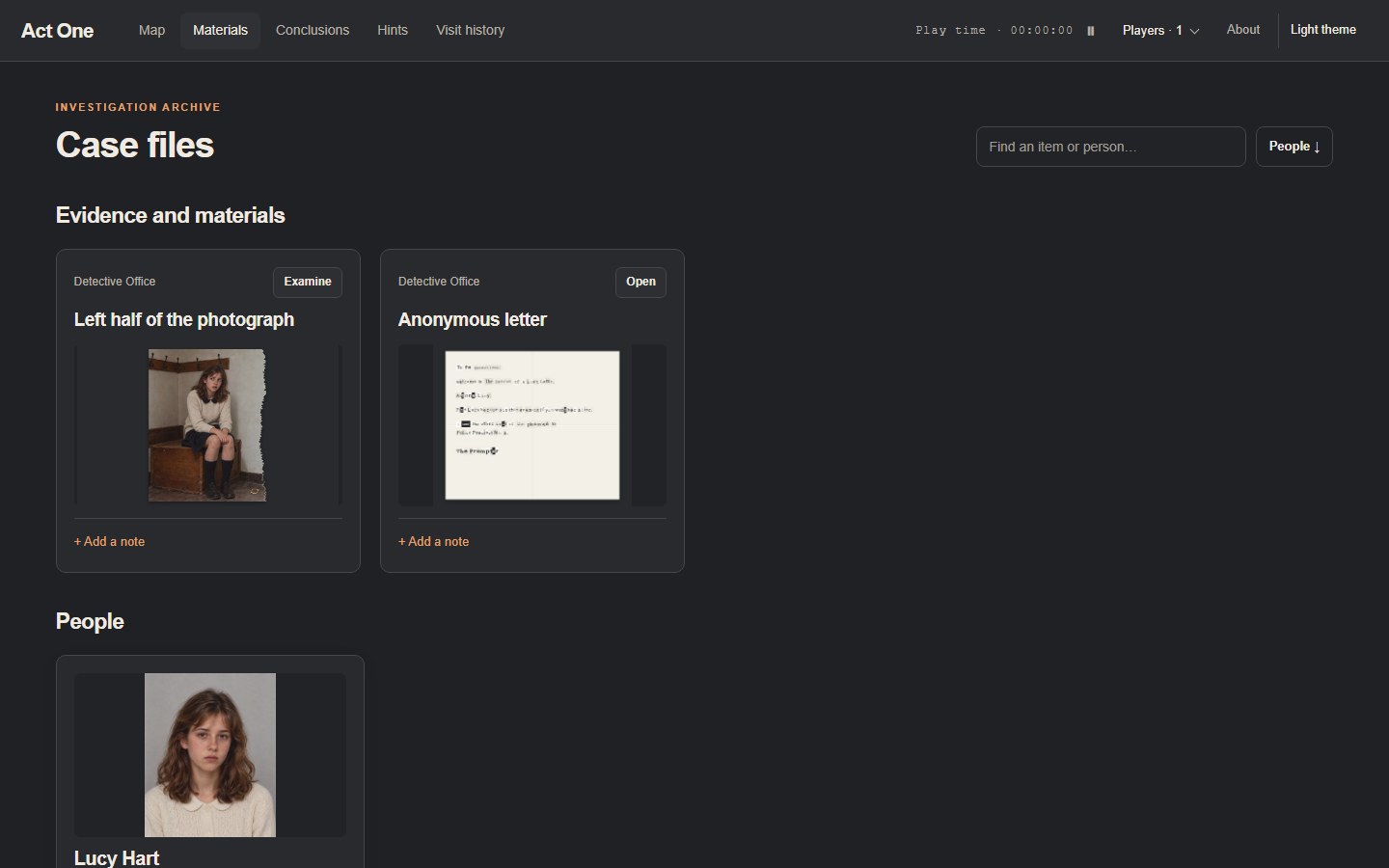
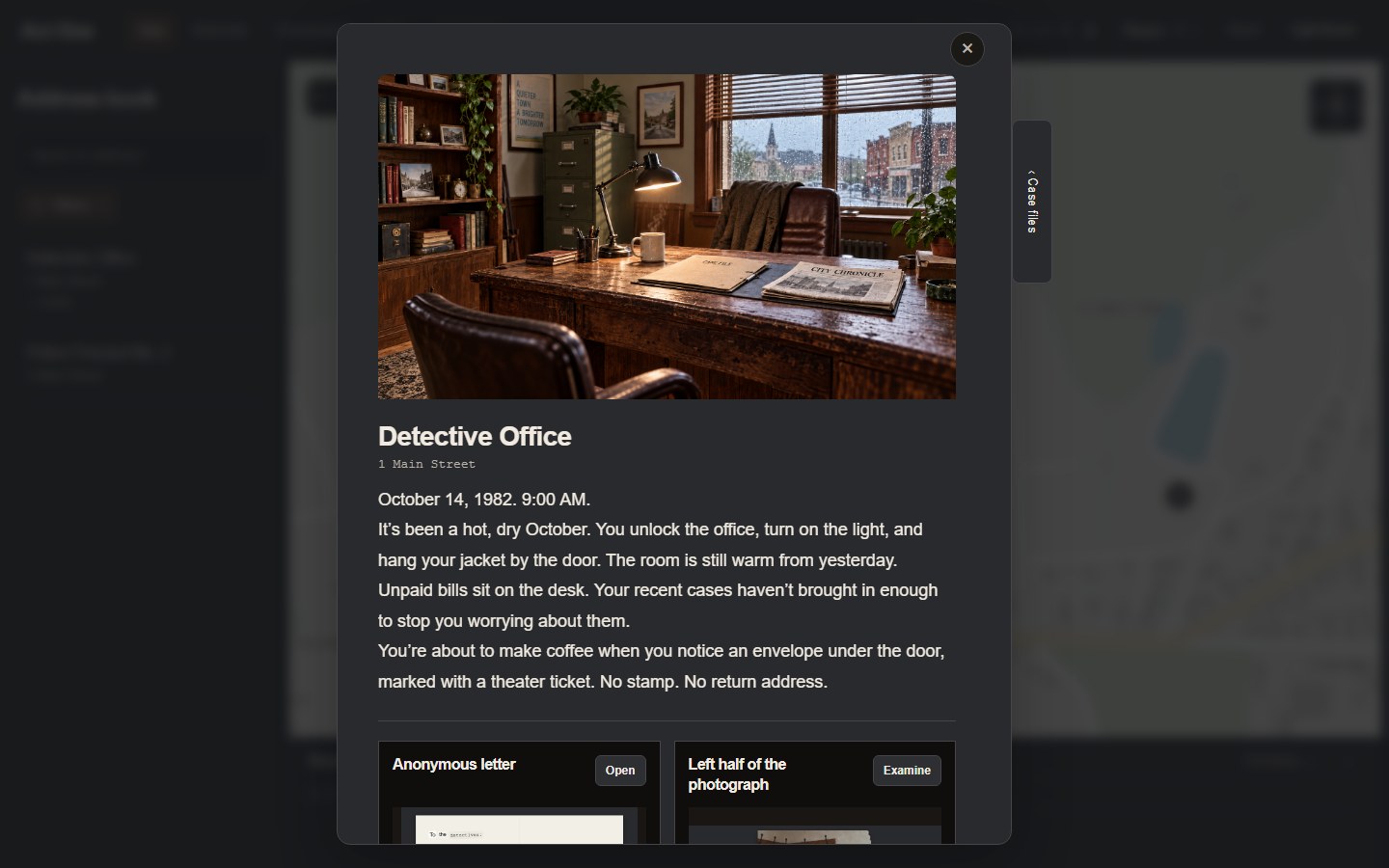
In Case 34, Intro Case is a free introductory investigation. It introduces the map, documents and case files through a complete story. Begin at the detective office and open the starting materials before heading out. The contextual tutorial will introduce the controls as you need them.
Turn a detail into a lead
A lead gives you something specific to do. A street name can become a search in the address book. A person’s name can suggest a conversation. An unexplained object can give you a reason to examine a photograph more closely. If you cannot explain why you are visiting a location, return to your materials and look for a question that the visit could answer.
Use the address book to search for people, places or streets. Choose a result to locate it on the map, then visit the address and read the scene. Some places will give you several actions; others may only offer an account worth remembering.
Read the source before trusting your interpretation
Open documents and photographs rather than relying on their thumbnails. Read the whole relevant passage, including dates, names and the context around a striking sentence. There is a difference between a witness saying something happened and a document independently recording it.
Keep that difference in your notes. ‘The witness says she left before the meeting’ is more useful than ‘She has an alibi’ until another source supports the claim. You can revise a cautious observation without having to rebuild your entire theory.
Keep notes that tell you what to do next
A good note preserves a useful detail and the question it raises. Select an important passage and add it to your case files. Include enough context to remember who supplied it. Materials and visit history help you return to the source when another clue changes its meaning.
- Record names, addresses and relevant times accurately.
- Separate confirmed details from working theories.
- Keep one or two unanswered questions beside each promising lead.
- Return to the original source before submitting a conclusion.
Revisit deliberately, and use a hint when it helps
A first visit does not always exhaust a location. Later evidence can give you a new question to ask or a code to try. Return because something has changed in your knowledge, rather than repeating every action in the hope of a different result.
If you feel stuck, name the exact obstacle: a missing address, an unexplained number, an uncertain sequence of events. Reread the sources connected to that obstacle. The game also provides hints, so you can get a little direction and continue investigating.
Finish with an explanation you can support
Before opening Conclusions, try to explain your theory out loud. What happened? Which evidence supports it? What would contradict it? A theory should connect the details you found rather than simply name a suspicious person.
Write an answer to each question in your own words, review your responses, then submit when you are ready to finish the case. You can then read the explanation and compare its reasoning with your own. Ready to try the process? Start with Intro Case from the case library.
Put your curiosity to work
Your first case is free.
Meet the Prompter in Intro Case, a complete introductory investigation. Play solo or in co-op with up to five players.
Choose Intro Case →